Read time: 5 minutes
“If I get a solid roof, it’s going to make my living room dark, isn’t it?” We hear this on almost every survey where a tiled roof comes up. It’s a fair worry. The conservatory is often the only thing letting daylight into the kitchen or lounge behind it.
Here’s the thing: a solid roof doesn’t have to be a dark roof. The mistake isn’t choosing a tiled roof. It’s choosing one without planning the light.
This guide gives you three checks to work out what your room needs, and what it costs to get it right.
The Short Answer
- A tiled roof only makes a room dark if you put no glass in it.
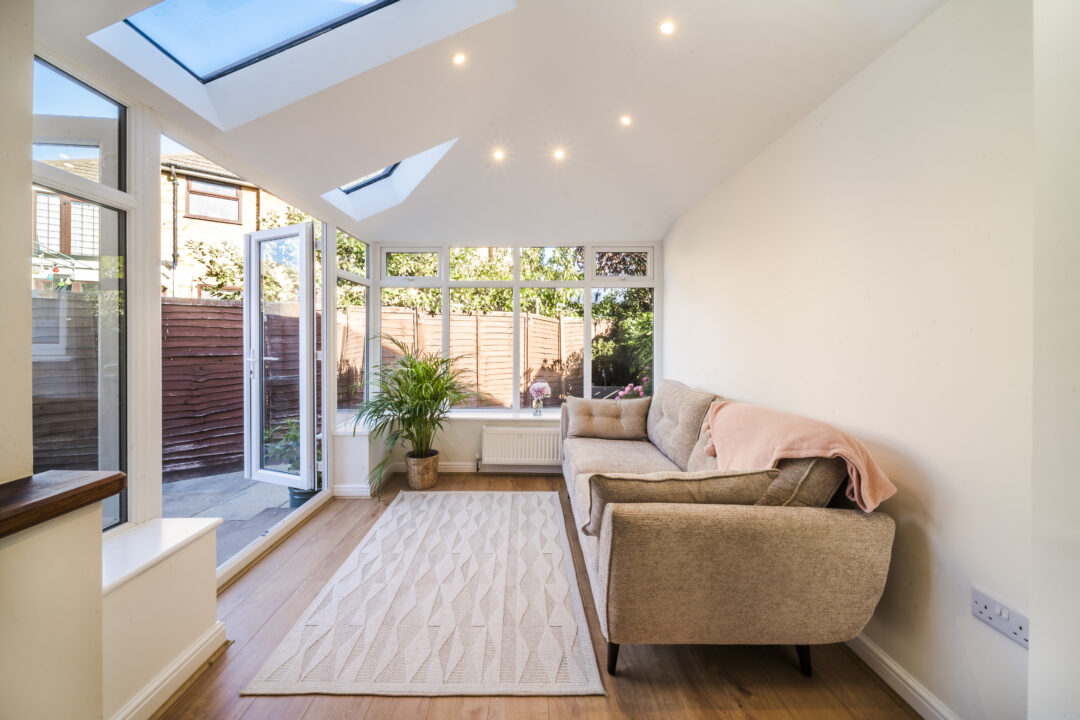
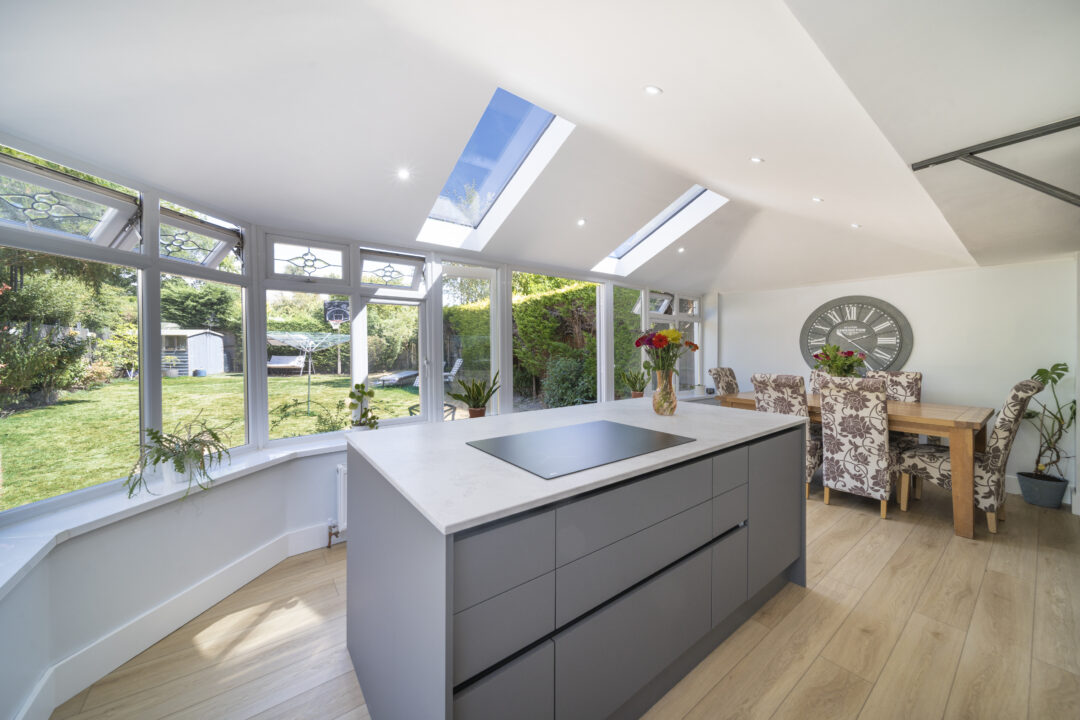
- Glass panels or roof windows set into a tiled roof keep daylight coming into the conservatory and the rooms behind.
- Whether you need them depends on the shape of your room and how much glazing is on the sides.
- A standard 3m by 4m conservatory with glass sides usually doesn’t need roof glass. A long, deep room with no windows behind it usually does.
- Get this decision right first time. Adding glass to a finished roof later is expensive or impossible.
Download “5 Checks To Do On Your Conservatory Before You Spend A Penny“, our free 10-minute Year-Round Room Checklist. Walk round your room with it and you’ll know which fix you need before you speak to anyone.
If you’d rather we looked at your room, we offer a free 30-minute design review.
Chek the Room behind
Stand in your kitchen or lounge with the conservatory door open. Where is the light coming from?
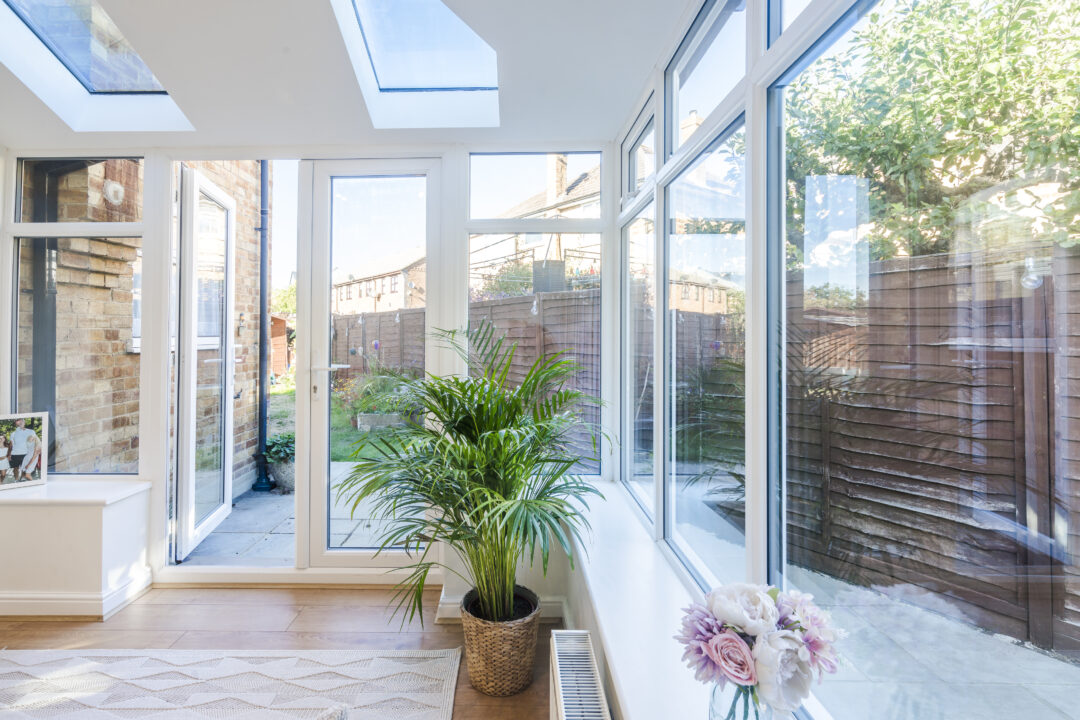
If that room has its own windows, the conservatory roof matters less. Light will still come through the frames and doors.
If that room has no windows of its own, the conservatory is its daylight. This is common on terraced and semi-detached houses where the conservatory covers the whole back wall. Here, roof glass isn’t a nice-to-have. It’s the difference between a bright kitchen and one where the lights are on at midday.
Check the shape and the sizes
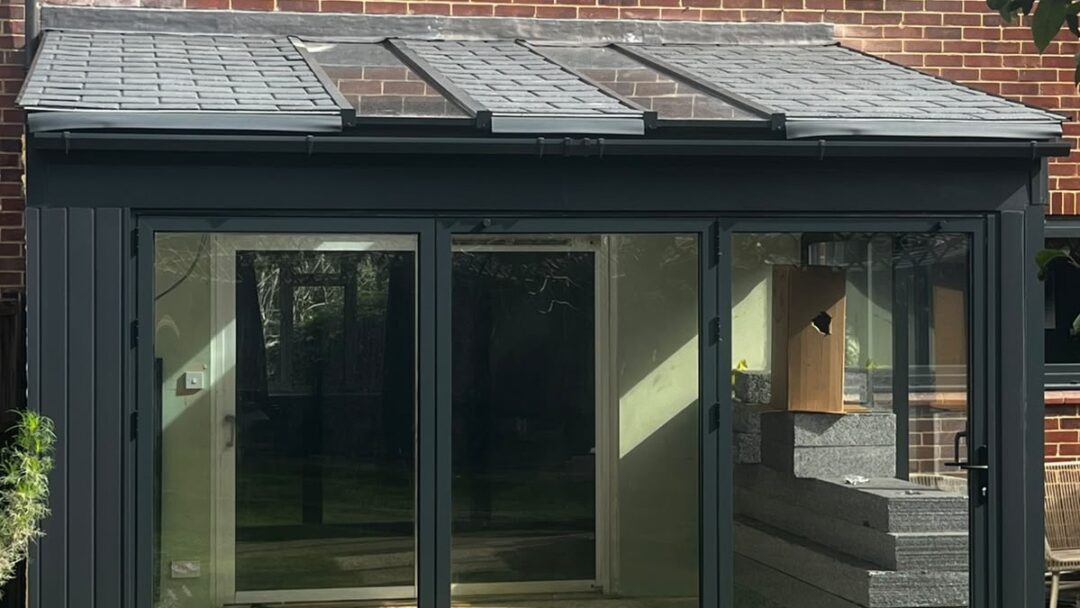
Insulated tiled roof
What we tell homeowners on site is this:
“On standard structures, say 3 by 4 or 4 by 4 with some glazing on the sides, you don’t have to have it. The light will come in from the frames. If you’ve got a large space with a long front-to-back projection, and we’re covering the back of a house with no doors or windows into the new space, then it’s worth having some kind of Velux or Sky Vista to bring light in.”
So the two things to look at are:
- Projection. How far does the room stick out from the house? The deeper it is, the further the light from the side frames has to travel, and the darker the back of the room gets.
- Side glazing. Full-height glass on three sides gives you a lot of light. Dwarf walls with windows above give you less. A room with a solid wall on one side (for privacy from a neighbour, say) gives you less again.
Long projection plus limited side glass means you need glass in the roof.
Choose the Type of Glass
There are three ways to bring light through a solid roof:
Glass panels (Sky Vista). Large sheets of glass set flush into the tiled roof. They give the most light and the cleanest look from inside, with a view of the sky. This is what we fit most often.
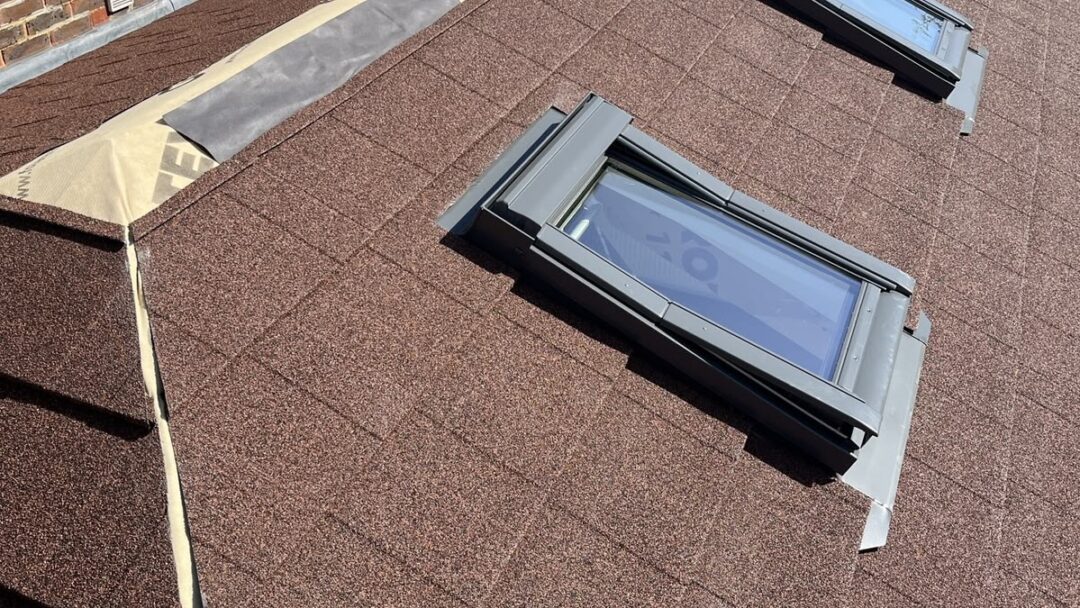
Roof windows (Velux). Smaller, and they open. Useful for ventilation, though in our experience most people rarely open them. “They don’t get the pole out.”
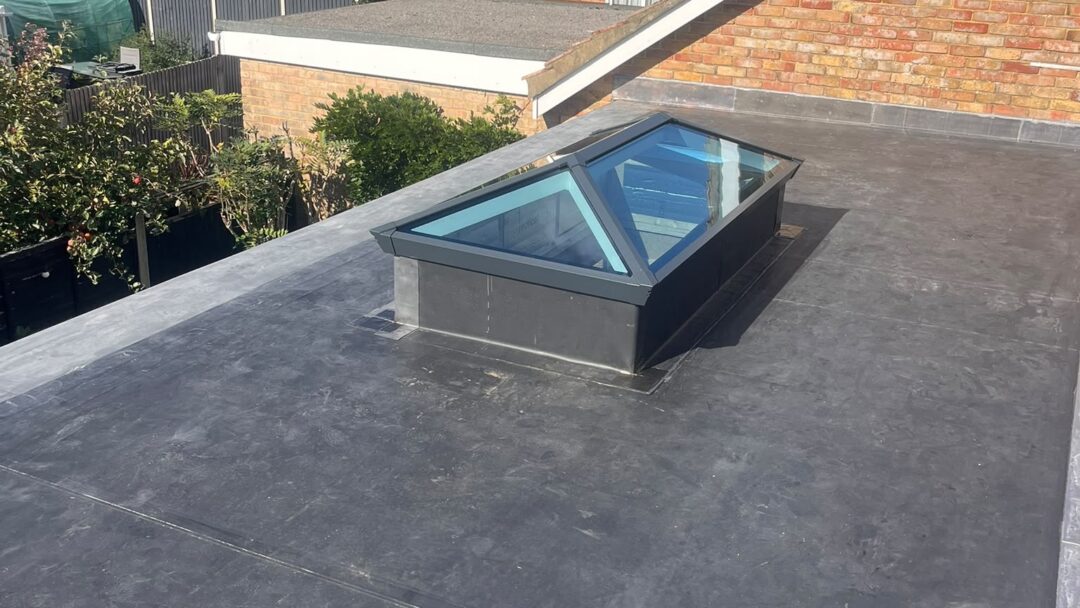
A lantern. For a flat roof rather than a tiled one. A raised glass box in the centre of the ceiling. Bright, and it gives an orangery look.
There’s a benefit beyond light. A glass panel breaks up a plastered ceiling, lets you see the sky, and on a design with few windows it can add a ventilation point.
The rule we work to: we have never had feedback that glass in a roof made a room too hot or too cold. We have had feedback that no glass made it too dark. And once you lose the light, you can’t get it back.
What this feels like day to day
Get it right and you’ll stop noticing the roof. The kitchen behind is as bright as it was, and the sky is still there when you look up from the dining table.
Get it wrong and you’ll feel it every morning: lights on at midday. It’s the one regret we hear from people who had a solid roof fitted elsewhere. “They said no, we’ll leave it, and then afterwards they wished they’d put something in.”
A real example: Crawley Down, West Sussex
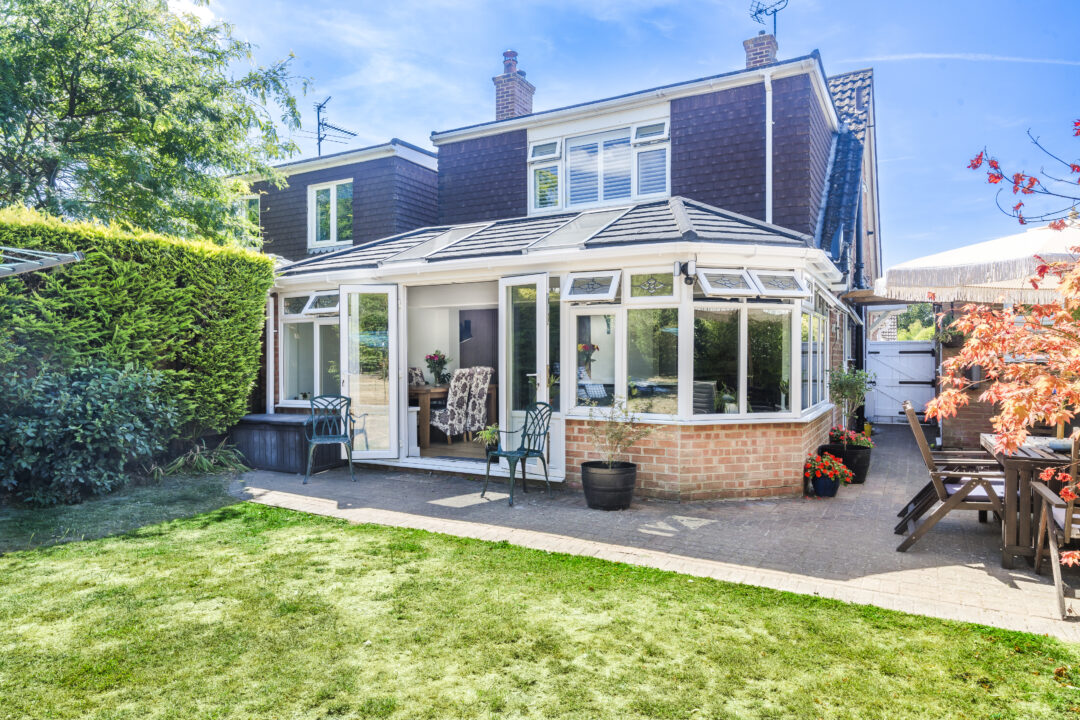
Background: A family had a large conservatory across the back of the house with an old polycarbonate roof. It was too hot and too cold to use, but it was also the only source of daylight for the kitchen and lounge behind, which have no windows of their own.
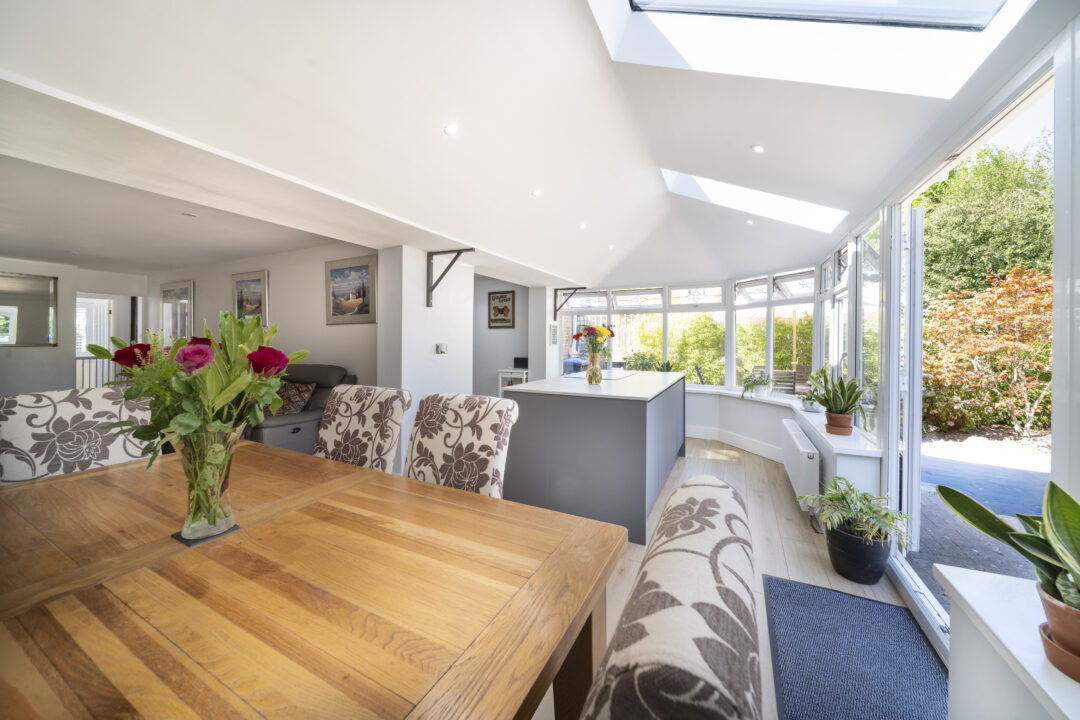
What we did: kept the sound frames and replaced only the roof with an insulated tiled system. Two large Sky Vista glass panels were set into it, positioned so the light carries through into the rooms behind.
Outcome: the room holds its temperature all year (cooler inside than out during this summer’s heatwave, doors shut) and the kitchen and lounge behind are still bright. In the customer’s words, “it feels like a completely new part of the house.”
Real-world example:

How this affects your budget
- A Velux roof window adds roughly £450 to £650 each.
- A Sky Vista glass panel adds £400 to £750 each.
- A typical insulated tiled roof, fully finished with plastering, downlights, building regulations and waste removal, is £15,000 to £17,000.
The important number is the one you don’t see. Adding glass to a tiled roof after it’s finished means opening up the roof and the ceiling again. It’s very expensive, and sometimes it can’t be done. Plan the glass in now.
Final Takeaway
A tiled roof fixes the heat. Glass in that roof keeps the light. Whether you need it depends on the depth of your room, the glazing on its sides, and whether the rooms behind have windows of their own. Decide it once, at the design stage.
This is part of our bigger guide on fixing a conservatory you can’t use: Conservatory Too Hot in Summer and Too Cold in Winter? What Actually Fixes It (and What Doesn’t) in 2026
Download “5 Checks To Do On Your Conservatory Before You Spend A Penny. Walk round your room with it and you’ll know which fix you need before you speak to anyone.
If you’d like help planning this for your own home, book a ffree 30-minute design review. We’ll check the light in your room and tell you plainly whether you need glass in the roof, and where.
Want to book a free 30-minute design review?
We’ll sanity check your plan with you before you spend a penny