Read time: 10 minutes
“It’s either fifty degrees or it’s zero.” That’s how one homeowner described their conservatory to us this summer, and it’s the most common thing we hear on site. The room was a good idea when it was built. Now it’s a sweatbox in July, a fridge in January, and used for storage the rest of the time.
Most people assume the fix is a better heater, some blinds, or a thicker sheet of polycarbonate. Those were the options 20 years ago. The roof systems available today are a different thing altogether, and they’ve changed what a conservatory can be.
So the real question isn’t “how do I take the edge off?” It’s “do I want this to be a proper room, or a conservatory that’s a bit more comfortable?” The answer decides what you should spend.
This guide walks through the options, what each one actually achieves, what they cost, and the mistakes we see people make. By the end you should know which route fits your home.
The Short Answer
- The roof is what’s making your room too hot and too cold. Heat rises, so that’s where you gain it in summer and lose it in winter.
- To make the room usable all year, you need a new insulated roof (tiled or roof lantern).
- Glass is better than polycarbonate, but it won’t make it a true year-round room.
- Insulated panels, clad-overs are a halfway house. They cost £5,000 to £9,000 and usually lead to spending again later.
- You rarely need to rebuild the whole conservatory. If the frames are sound, keep them and change the roof.
- A solid roof does not have to make the room dark. Glass panels or a lantern keep the light.
- Expect £15,000 to £17,000 for a typical tiled roof, fully finished and certified.
If you’d like a straight answer on which route suits your conservatory, we offer a free 30-minute design review. No pressure, just a proper look at the room and honest advice.
The Four Options at a Glance
| Insulated panels or clad-over | Glass roof | Tiled roof | Flat roof with lantern | |
|---|---|---|---|---|
| Comfort | Slightly better. Still hot in summer, still cold in winter | Better than polycarbonate. Not a year-round room | Year-round room. Feels like an extension | Year-round room. Feels like an extension |
| Light | Reduced. Solid ceiling with no glass | Full light | Bright with glass panels set in. Solid ceiling without them | Bright, with sky views through the lantern |
| Look | Panels sit on top of the old roof, often visibly | Still looks like a conservatory | Reads as part of the house | Reads as part of the house, orangery style |
| Typical cost | £6,250 to £9,700 | £9,000 to £11,500 | £15,000 to £17,000 | £15,000 to £17,000 |
| Spend again later? | Very likely | Sometimes | Rarely | Rarely |
Download “5 Checks To Do On Your Conservatory Before You Spend A Penny” – our free 10‑minute Year‑Round Room Checklist. Walk round your room with it and you’ll know which fix you need before you speak to anyone.
Prefer to talk it through? Book a free 30‑minute design review and we’ll give you straight advice on your options.
Why the roof is the problem, not the heating
Heat rises. In summer the sun pours through a polycarbonate or old glass roof and the room cooks. In winter the warmth from your radiator goes straight out through the same roof.
As we tell homeowners: “When you turn the rads on, you’re basically heating the street.”
That’s why a bigger radiator, a fan heater or blinds never solve it. They fight the roof instead of fixing it. The biggest difference you can make to a conservatory is the roof, and nothing else comes close.
What actually fixes it
Insulated tiled roof
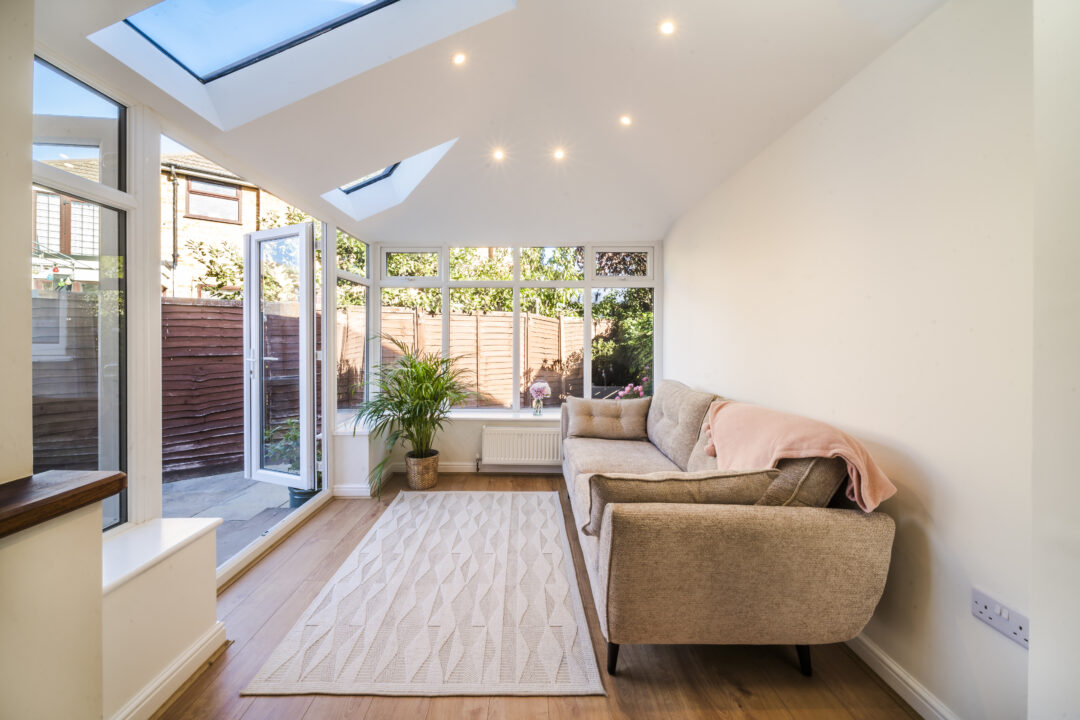
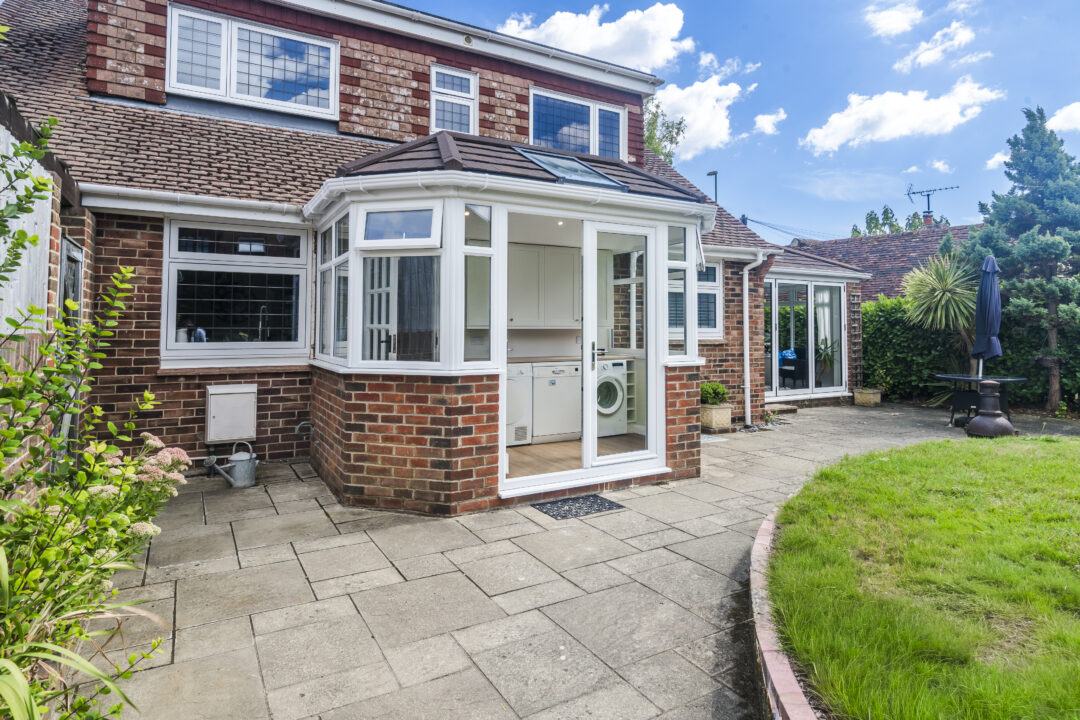
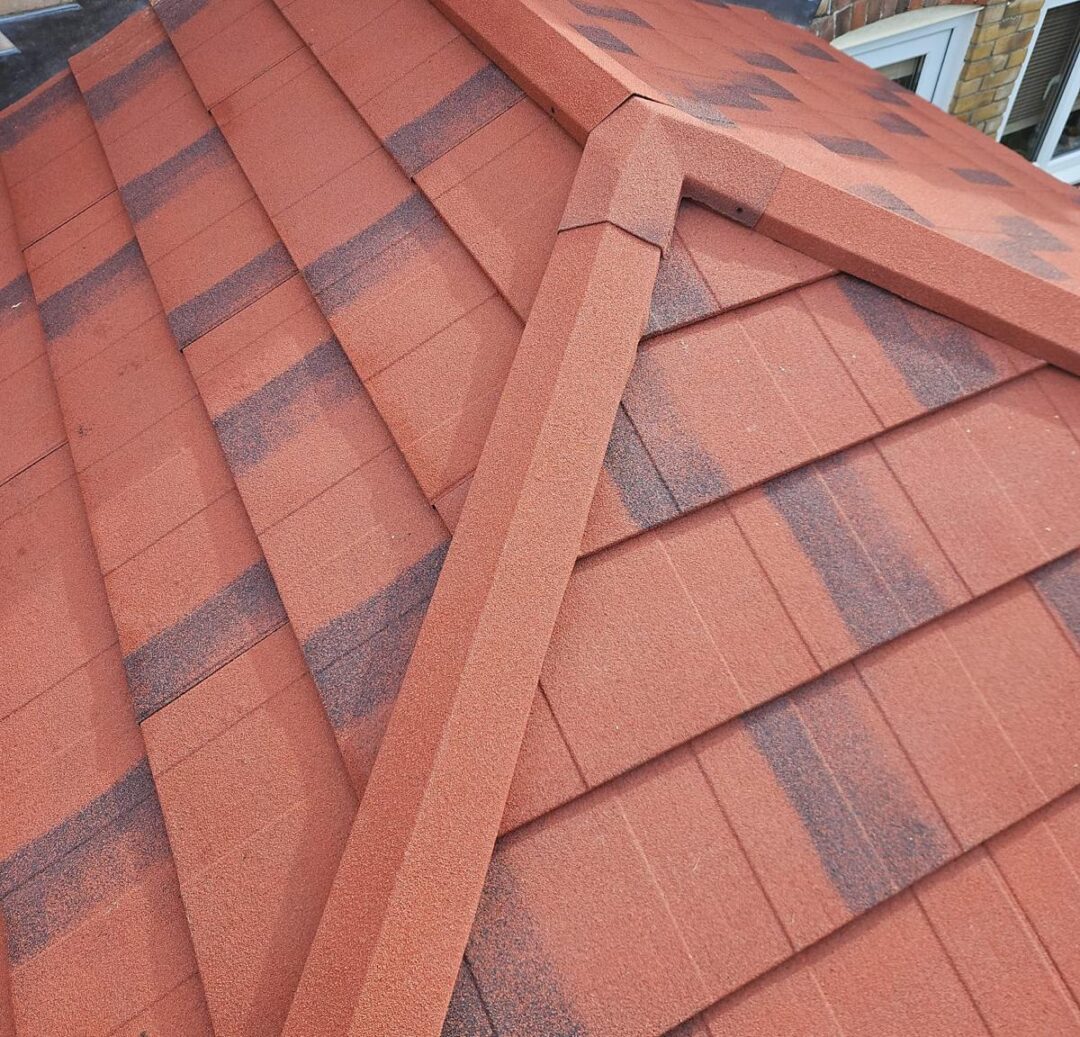
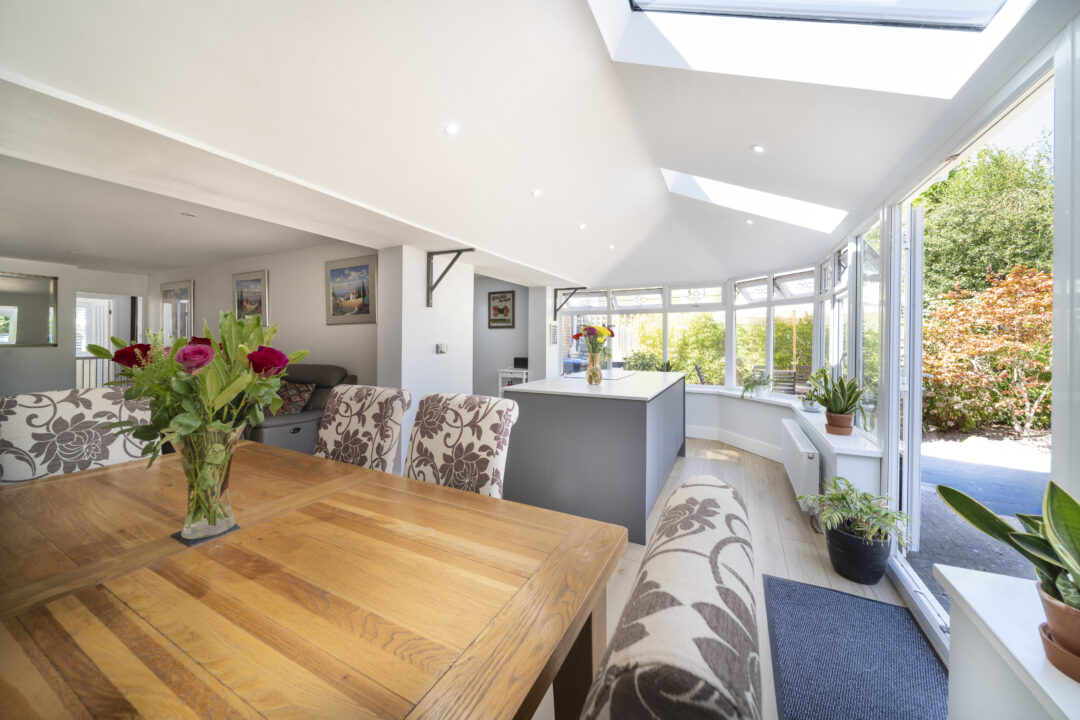
This is a lightweight roof system that replaces your old roof, sitting on your existing frames. Ours are packed with over 200mm of insulation and finished inside with a plastered ceiling and downlights. From the garden it looks like a tiled roof on a small extension.
The room stops behaving like a conservatory. It holds heat in winter and stays cool in summer. Our customer in Crawley Down, who only changed the roof, told us that in this year’s heatwave it was cooler inside with the doors shut than it was in the garden.
Right for you if: you want the conservatory to become a room you use every day, like a dining room, snug or playroom.
Flat roof with a lantern
The other route to a year-round room. A solid, insulated flat roof with a glass lantern in the middle. It gives the same warmth as a tiled roof, with a view of the sky and an orangery feel inside.
Right for you if: you want the year-round comfort but prefer the look of an orangery, or you want a big pool of light in the centre of the room.
Glass roof
A modern solar control glass roof is a real improvement over polycarbonate. It cuts the glare, reduces rain noise and keeps every bit of the light.
But we’re honest about the limits. What we tell homeowners is: “The glass is really good. I can’t lie to you and say it’s as good as the tile.” Glass helps. But it doesn’t make the room a proper room.
Right for you if: you like the feel of a conservatory and want it to stay one, just more comfortable. Some of our customers want exactly that, and for them a glass roof is perfect.
Not right if: you want to sit in there on a January evening or a July afternoon without thinking about the weather.
When a tiled roof is NOT the right answer
We talk people out of tiled roofs more often than you’d think. It’s the wrong choice if:
- You want it to feel like a conservatory. If the point of the room is the sky and the garden all around you, a glass roof keeps that and a tiled roof takes some of it away.
- Your frames are falling apart. If the frames are wooden and rotten, doors have dropped, or the glass units have blown, putting a new roof on them is money in the wrong place. Do the frames and roof together, or the frames can’t be done later without touching the roof again.
- You’ve outgrown the footprint. If what you really want is a bigger kitchen, a new roof on a small conservatory won’t get you there. That’s an extension conversation.
- You want to spend as little as possible. A tiled roof isn’t the cheap option. If the budget is £6,000, we’d rather tell you what that buys than sell you something that disappoints.
What it costs, and whats included
These are real figures from our recent quotes, including VAT:
- Insulated panels or clad-over: £6,250 to £9,700
- Solar control glass roof: about £9,000 to £11,500
- Insulated tiled roof/flat roof lantern: typically £15,000 to £17,000, with larger roofs at £19,600 to £22,500
- Roof plus new frames: about £18,000 to £25,000, depending on the size and type of frames
What’s in our tiled roof price. Be careful when you compare quotes here. Our figure includes full building regulations approval and certificate, a plastered ceiling, downlights, and disposal of the old roof. Not just the roof. A cheaper quote often leaves out the plastering, the electrics or the building control fee, and you find that out after you’ve signed.
What pushes the price up:
- The size of the roof, especially a long front-to-back projection
- Glass panels or Velux windows set into the roof (a Velux is roughly £450 to £650; a glass panel is £450-750)
- Replacing the frames as well as the roof
- Structural work, like extra brackets where a long box gutter needs support
On spending twice. This is the bit we’d ask you to read carefully. We are now upgrading conservatories for customers who paid for an insulated panel roof a few years ago. They spent £5,000 to £9,000, it took the edge off, and the room still wasn’t usable. Now they’re paying again for a tiled roof. If they’d gone straight to the proper roof they’d have one bill, not two.
We don’t price the budget. We price the work. The price on paper is our best price, and it’s fixed. If something minor turns up on site, we swallow it.
Mistakes we most Se
1. Buying the cheap fix and hoping.
Why it happens: A panel or clad-over quote of £7,000 looks a lot better than £15,000, and the salesperson says it’ll make it a “habitable room”.
What to do instead: Ask them to put that claim in writing. Panels are limited by your existing roof. As we tell homeowners, “same kind of issues, just less bad.” If we’re going to tell you the room is year-round usable, the product has to stand behind that.
2. Assuming a solid roof means a dark room.
Why it happens: People picture a plastered ceiling and nothing else.
What to do instead: Plan the light in from the start. Glass panels set into a tiled roof, or a lantern in a flat roof, keep daylight coming into the conservatory and into the rooms behind. We’ve never had feedback that glass in a roof made it too hot. We have had feedback that no glass made it too dark. Once you lose the light, you can’t get it back.
3. Ripping out a sound conservatory.
Why it happens: A firm that sells new conservatories tells you the old one has to go.
What to do instead: Get the frames checked. Modern lightweight tiled roofs exist precisely so you can keep good frames. “If they were heavy, there wouldn’t be a marketplace for them.”
4. Putting a new roof on tired frames.
Why it happens: The roof is the most expensive part, so it’s tempting to leave the frames “for later”.
What to do instead: If the doors have dropped and the glass is misting, do the frames and roof together. Doing frames afterwards costs more, and sometimes can’t be done at all.
5. Choosing on the roof alone, not on how you’ll use the room.
Why it happens: Quotes are about products. Your life is about the room.
What to do instead: Decide what the room is for first. A dining room needs a different answer from a sunny spot to read in.
A real example: Crawley Down, West Sussex
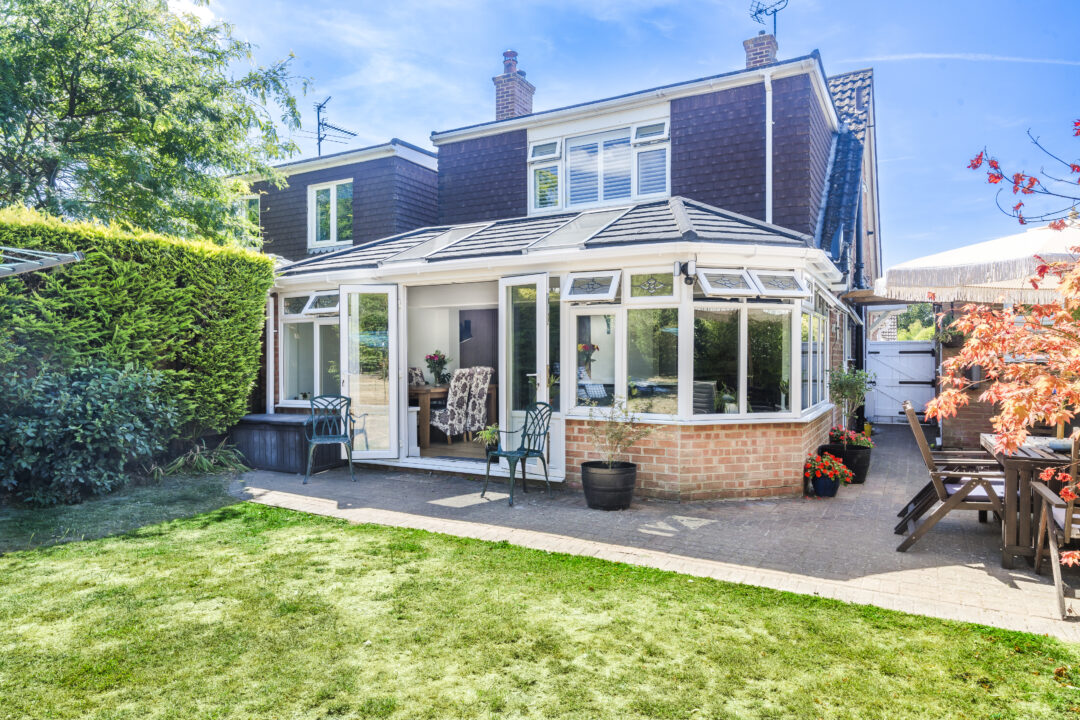
A family in Crawley Down had a good-sized conservatory across the back of the house with an old polycarbonate roof. Too hot in summer, too cold in winter, so nobody used it. They were also planning a much bigger refurbishment inside, so every pound had to work hard.
What they wanted: a dining room they could use all year, without spending the whole budget on the conservatory.
Why a roof-only tiled roof: the frames were sound. The problem was temperature, not the structure. A full rebuild would have solved a problem they didn’t have.
Key decisions: two large glass panels were set into the new roof, because the kitchen and lounge behind have no windows of their own and couldn’t lose the daylight. Part way through, the long box gutter needed extra support, so we fitted brackets to carry it properly rather than leave it.
The outcome: the room now reads as a brand new part of the house, at a fraction of the cost of a rebuild. In this summer’s heatwave, doors shut, it was cooler inside than out.
In the customer’s words: “The old roof made the room impossible to use, and we needed the rest of our budget for the work inside. Changing just the roof was the right call. It feels like a completely new part of the house.“
Real-world example:

Final Takeaway
If your conservatory is too hot in summer and too cold in winter, the roof is the problem and the roof is the fix. A glass roof makes it a nicer conservatory. A tiled roof or a flat roof with a lantern makes it a room. Cheap fixes sit in between and usually end up being paid for twice.
Decide what you want the room to be, then choose the roof that can actually deliver it.
If you want clarity before you spend anything, download “5 Checks To Do On Your Conservatory Before You Spend A Penny” – our free 10‑minute Year‑Round Room Checklist. Walk your conservatory with it once and you’ll know whether glass, tile, or a full rebuild makes sense.
Want to book a free 30-minute design review?
We’ll sanity check your plan with you before you spend a penny