Read time: 4-5 minutes
Many homeowners in the South of England assume open-plan living means removing large sections of the rear wall and living through months of disruption.
In reality, many homes can be opened up far more simply, often without major steelwork or full wall removal.
This guide explains how partial openings work, when steel is required, and how you can achieve an open-plan feel with far less cost and disruption.
The Short Answer
- Open-plan living does not always require removing the full rear wall
Many layouts work by removing doors, windows or part of the wall only - Steel is only required when openings are widened or newly created
- Partial openings are often cheaper, faster and less disruptive
- You can achieve a strong open-plan feel without turning your home into a building site
What “Partial Open-Plan” Actually Means
Partial opening means working with the structure you already have, rather than removing everything.
This often includes removing:
- Existing doors
- Existing windows
- The wall below a window
- Slightly widening an opening by 200–300mm
These changes can dramatically improve flow, light and connection to the garden, without the complexity of a full knock-through.
Do You Always Need Steel?
No.
Most homes already have structural support above doors and windows.
Steel is not required when:
- You remove doors or windows
- You do not increase the size of the opening
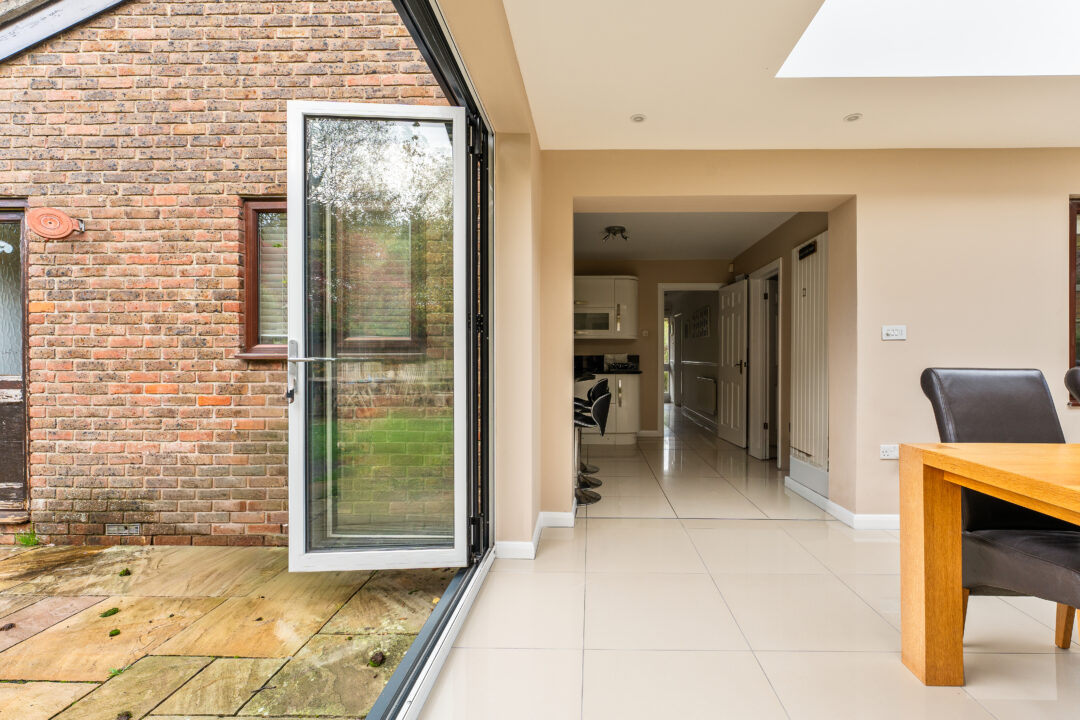
- You fit new doors, such as bifolds, into the existing gap
Steel is required when:
- You create a brand-new opening
- You widen an existing opening, even slightly
- Load from above needs to be redistributed
This distinction is why some open-plan layouts are far more cost-effective than others.
Cost Impact: Why Partial Openings Matter
Structural steel is usually the biggest cost swing in open-plan projects.
Typical comparison:
- Removing existing doors or windows and making good
£200–£300 for removal and plastering - Creating a new 2–3 metre opening with steel and calculations
£2,000–£3,000+
By keeping the existing opening size, many homeowners save thousands and still achieve a similar open-plan effect.
Disruption: What Living Through the Work Is Really Like
Partial openings are far less disruptive than full wall removal.
In most cases:
- Doors and windows are removed after the new structure is watertight
- Any wall removal happens quickly, often within 1–2 days
- Dust sheets and temporary barriers are used to separate spaces
- Openings are boarded and protected immediately
You are rarely left exposed to the elements, and most homeowners remain in the house throughout.
How Partial Openings Help With Design
Light Control
Removing doors or windows improves light flow without blocking it with a solid roof.
This is especially important for kitchens and dining areas behind the new space.
Zoning
Partial openings naturally define spaces without closing them off.
This helps balance noise, warmth and day-to-day use.
Structure
Working with existing openings reduces structural complexity and risk.
Less steel often means faster builds and lower costs.
Real-World Scenarios We See Often
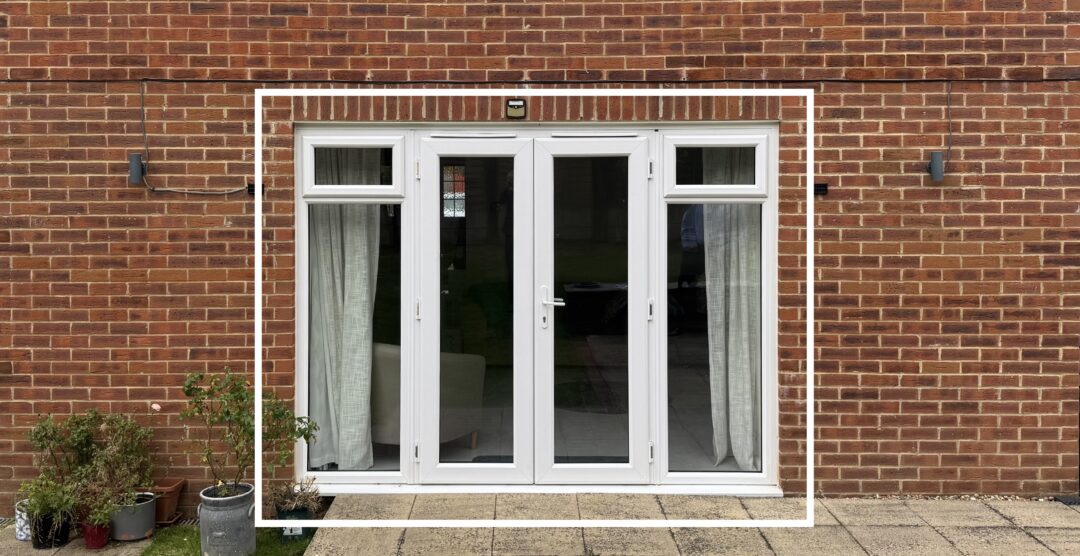
Scenario 1: Existing Doors With Side Panels.
Follow white lines on image
- Remove doors and side units
- Create a 2–3 metre opening
- No steel required
- Strong open-plan feel at low cost
Result:
Large, open connection with no steel required and minimal disruption.
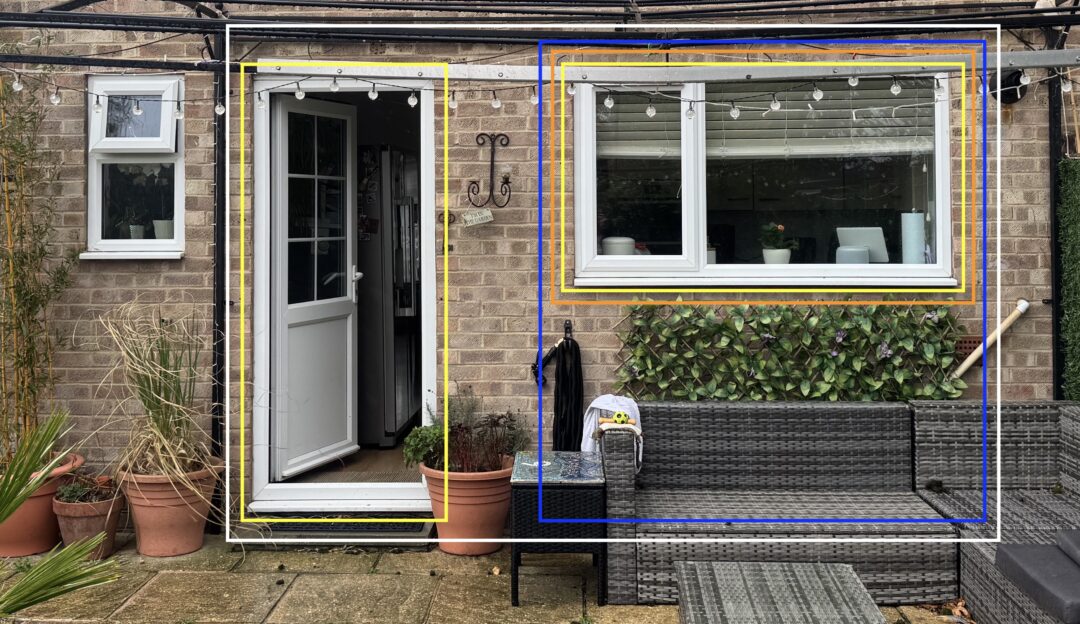
Scenario 2: Door and Window on the Rear Wall
The homeowner wants open-plan living but doesn’t want a full rebuild.
Option A: Follow yellow lines on image
- Remove the door
- Remove the window
- Keep existing kitchen layout
No steel required.
Option B: Follow yellow + orange lines on image
- Cut the wall down to worktop height
- Retain existing units
- Create a breakfast bar or seating on the new side
Option C: Follow yellow + blue lines on image
- Remove the door
- Remove the window
- Remove the wall below the window
This may require a kitchen re-jig but still avoids major structural work.
Option D: Follow white lines on image
- Remove the door
- Remove the window
- Remove the wall below the window
- Remove the pillar between the wall and window.
If the pillar between is removed, steel may be required, but disruption remains minimal.
When Partial Open-Plan Works Best
- You want openness without major cost
- You want to minimise disruption
- You want better light and flow, not one vast room
- You prefer investing budget into finishes, flooring or doors
If you want a completely flush, wall-free opening, steel is usually unavoidable. But many homeowners do not need that to achieve the lifestyle they want.
When a Full Knock-Through Is Still the Right Answer
A full opening is usually better when:
-
You want one continuous room with no wall returns
-
The layout demands a wide, uninterrupted span
-
Structural change is unavoidable to achieve the design
The key is choosing the right solution, not the biggest one.
Final Takeaway
Open-plan living is not about removing walls for the sake of it.
It is about layout, light and how you use the space.
Keeping part of the rear wall often delivers the same feeling, with less cost, less disruption and fewer structural demands.
 Book a free 30-minute consultation and we’ll help show you cost-effective ways of creating an open-plan space.
Thinking about opening up your home without major disruption?
We will help you explore layout options, costs and whether partial or full open-plan is right for your house before any walls come down.