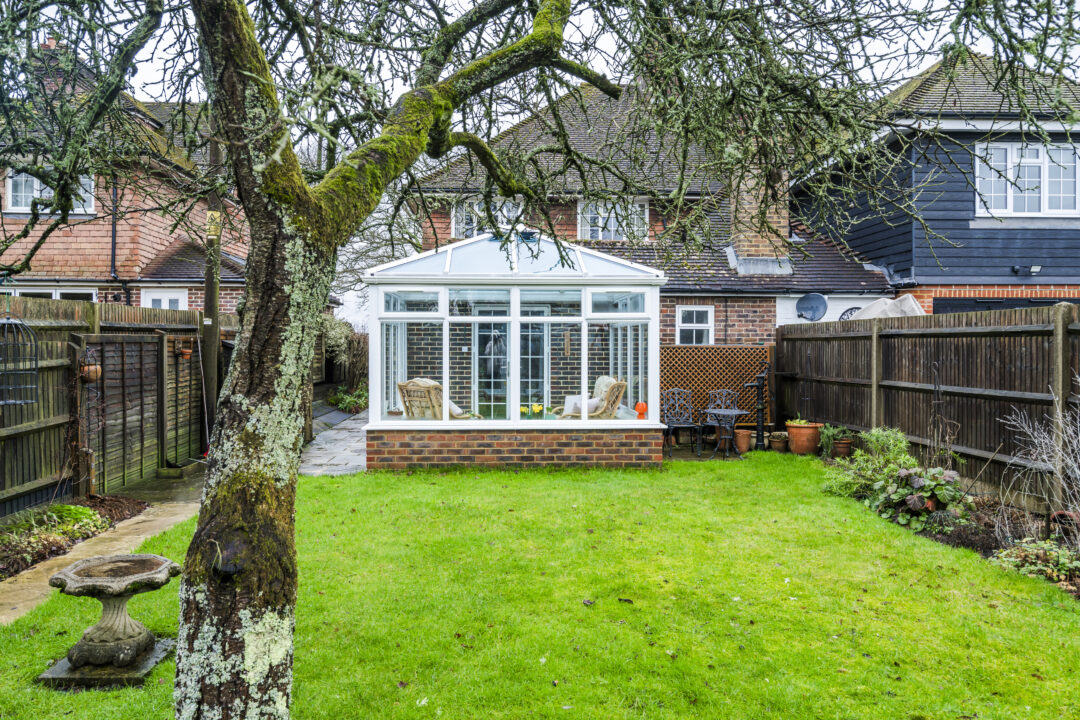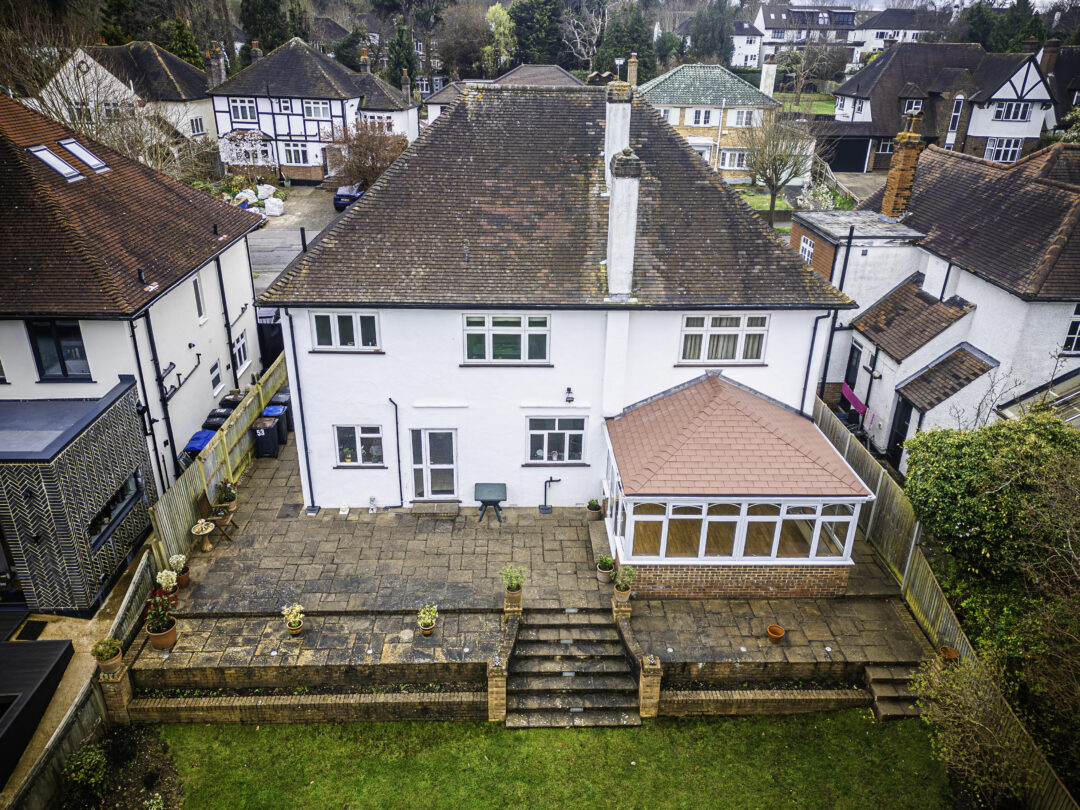
If you’ve had three quotes to replace your conservatory roof and one is thousands cheaper than the others, this guide is for you.
Most homeowners with older conservatories or glazed rooms in the South of England face the same dilemma in 2026. They want the space to be usable all year, but the prices they receive vary wildly. Each quote is described as a “roof upgrade”. Each claims it will fix the problem.
The confusion is understandable.
Roof-only conversions cover a wide range of products, insulation levels, guarantees, and structural approaches. Some genuinely turn a seasonal space into a proper room. Others mainly change how it looks on paper.
This guide explains why roof-only quotes vary so much, what cheaper options often leave out, and how to decide which type of roof-only upgrade is actually right for your conservatory long term.
The Short Answer
- Roof-only conversions can be good value only when the existing structure is sound.
- Many cheaper systems improve comfort slightly but do not create a true year-round room.
- The biggest differences between quotes are insulation performance, structure, and longevity, not brand names.
- If the base, frames, or layout are failing, upgrading the roof alone can be wasted money.
The right decision depends on performance, guarantees, and what problem you are actually trying to solve.
At a Glance: Cheap vs Proper Roof-Only Conversions
- Comfort:
- Cheaper systems often reduce glare or noise slightly. High-performance systems deliver true year-round usability.
- Insulation:
- Thin panels and clad-overs improve figures on paper. Deep insulation actually keeps heat in during winter and out in summer.
- Longevity:
- Short guarantees often reflect systems built to minimum standards. Longer guarantees usually signal durability and confidence.
- Structure:
- Heavier roofs on weak frames can cause problems later. Proper systems assess structure before upgrading.
- Value:
- Lower upfront cost can mean paying twice. Matching the solution to the problem protects long-term value.
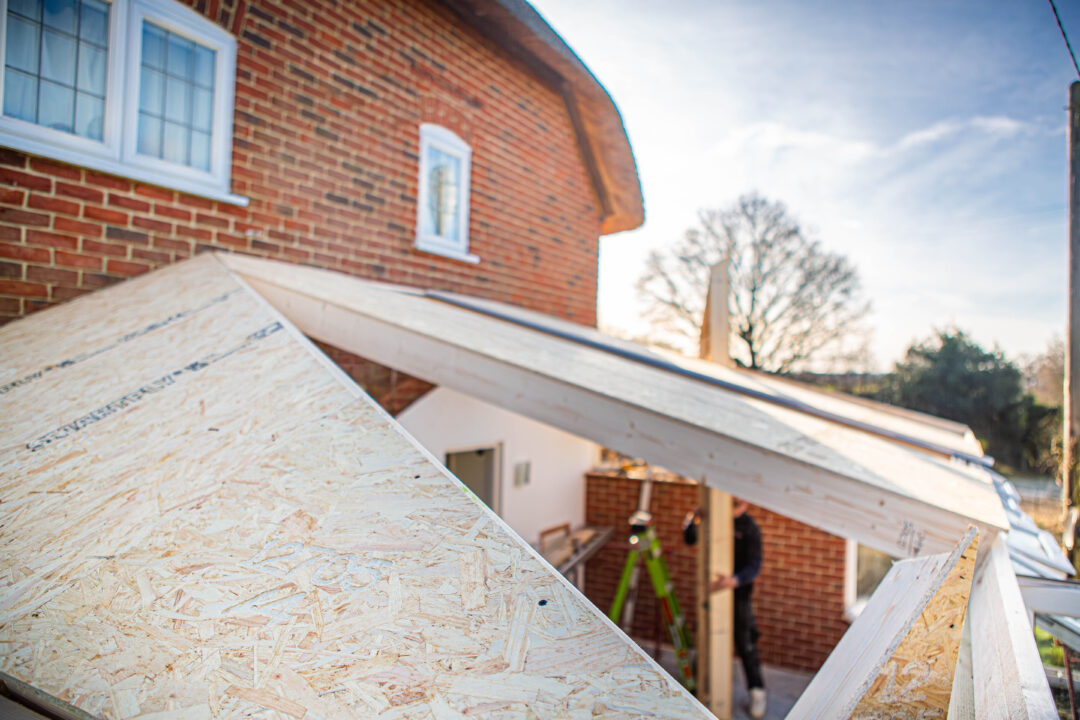
Why Roof-Only Quotes Vary So Much
Homeowners often receive roof-only quotes that differ by £2,000 to £5,000, sometimes more. On the surface, this feels hard to justify. The size looks the same. The roof looks solid. The promise is the same: “make the room usable”.
The reality is that these quotes are often solving very different problems, even though they share the same label.
Some systems focus on appearance. Others reduce glare or noise slightly. Some aim to meet minimum insulation standards. A smaller number are designed to make the space behave like a true extension.
Headline price alone is a poor comparison tool because most homeowners are not shown what has been traded away to reach that lower figure.
The risk is not choosing a roof-only conversion.
The risk is choosing one that doesn’t solve the reason you’re upgrading in the first place.
To make this practical, each of the risks below is explained in terms of how it usually feels to live with, and what it can mean for cost later.
Hidden Risk #1 – Chasing a Lower Price Instead of Lower Heat Loss
Understanding U-values in plain English
A U-value measures how quickly heat escapes through a surface.
Lower number means less heat loss.
 Think of it like golf – the lower your score, the better.
Small numerical differences matter because they affect how the room feels in January and how it behaves in July.
Typical ranges explained simply:
- Polycarbonate or old glass (around 1.7-3.2): very high heat loss. Classic “too hot in summer, too cold in winter”.
- Budget insulated panels (around 0.29): better than before, but still needs heavy heating.
- Low-spec tiled roofs (around 0.19): improved again, but still struggles in extreme cold or heat.
- High-performance systems (around 0.12–0.13): behaves much closer to an extension and supports year-round use.
What this feels like in real life:
A roof that looks solid does not automatically keep the room comfortable. Many cheaper upgrades still leave homeowners cranking the heating in winter and avoiding the space in summer.
Key takeaway: A roof that looks like an extension does not always perform like one.
Hidden Risk #2 – “Clad-Over” Systems That Are Cheap But Very Ineffective
A clad-over system involves fixing new materials over the existing roof rather than removing it fully.
Insulation gains are minimal because the original structure remains. Temperature swings often stay. The room still behaves like a conservatory.
Because the original roof structure remains, weight and load paths are not always reassessed properly. That’s why some clad-over solutions are now flagged on surveys or rejected by Building Control.
What this feels like:
Still too hot in summer. Still cold in winter. The space looks different but does not feel different enough.
What this usually means for your money:
Often leads to doing it twice. Once cheaply, then properly later.
Clad-over solutions can make sense for very tight budgets, but they are usually a temporary improvement, not a long-term fix.
Hidden Risk #3 – Thin Insulated Panels That Promise More Than They Deliver
Many panel systems use around 75mm of insulation and achieve a U-value close to 0.29.
This is an improvement, but it is limited.
The room may feel better on mild days, but still struggles during cold winters and hot summers. Heating costs remain high, and the space rarely becomes a main living area.
What this feels like:
Better than before, but not good enough to rely on daily.
What this usually means for your money:
You pay for improvement rather than resolution, which often leaves the room under-used long term.
It’s not bad. But it is not a full solution for homeowners who want a proper room.
Hidden Risk #4 – Low-Insulation Tiled Roofs That Look Right but Perform Average
Some tiled roof systems use rock wool insulation and achieve U-values around 0.19.
They look like a solid extension roof, but insulation depth is limited.
The tile itself does not keep you warm. The insulation does.
What this feels like:
The room looks right and feels better, but you still find yourself adjusting heating more than expected.
What this usually means for your money:
Costs are often close to higher-performance systems. The small saving can leave homeowners feeling they almost chose the right option, but not quite.
Hidden Risk #5 – Short Guarantees on the Most Important Part of the Build
The roof is the most critical element of the upgrade.
Many cheaper systems offer guarantees of around 10 years, often limited to materials only.
Higher-performance systems typically offer longer guarantees, sometimes up to 25 years, covering defects in the roof system itself.
What this means for homeowners:
Confidence matters. A longer guarantee usually reflects a system designed to last, not just pass minimum standards.
Longevity is value, not luxury.
Hidden Risk #6 – Overloading Weak Frames and Foundations
A heavier roof placed on tired frames or a weak base can create long-term problems.
Movement, deflection, and stress cracks may not show immediately. They often appear years later, long after the upgrade is paid for.
This is why structural checks matter, and why roof-only is not always the safest option.
If your existing base or frames are already failing, the real decision usually isn’t which roof-only system, but whether a roof-only upgrade is appropriate at all. We cover that in more detail in our [roof-only vs rebuild guide].
How to Compare Roof Quotes Properly
Use this checklist:
- Is the product type clearly labelled (clad-over, panel system, full replacement tiled roof, or flat roof with lantern)?
- Is the U-value stated clearly?
- Is insulation thickness specified?
- Is the structural approach explained?
- What is the guarantee length and scope?
- How is Building Control handled?
- Does the system change performance or just appearance
If a quote cannot answer these points in plain English, you are comparing prices, not solutions.
What’s actually included in the price?
- Is plastering / making good included?
- Are electrics (disconnect / reconnect / new lighting) included?
- Is scaffolding, if needed, included?
- Are Building Control fees included where they apply?
- Who is responsible for decorating and flooring afterwards?
Two quotes can differ by thousands simply because one includes a finished room and the other stops at a bare structure.
The Real Decision You’re Making
When comparing roof-only quotes, the real question is not:
“Which roof is cheapest?”
It is:
“Which option actually delivers the level of comfort, performance, and confidence I expect for the money?”
That comes down to insulation performance, structural approach, and guarantee — not the headline price.
Final Takeaway
Cheap is not always wrong.
Expensive is not always better.
Value comes from matching the solution to the problem.
Roof-only conversions work brilliantly when used correctly.
Rebuilds make sense when structure and layout are the real issue.
 Book a free 30-minute consultation and we will make sure you avoid these risks and make the best decision possible for your home.
Not Sure Whether to Replace the Roof or Start Again?
We’ll assess your existing structure and tell you honestly what option will give you long-term value